
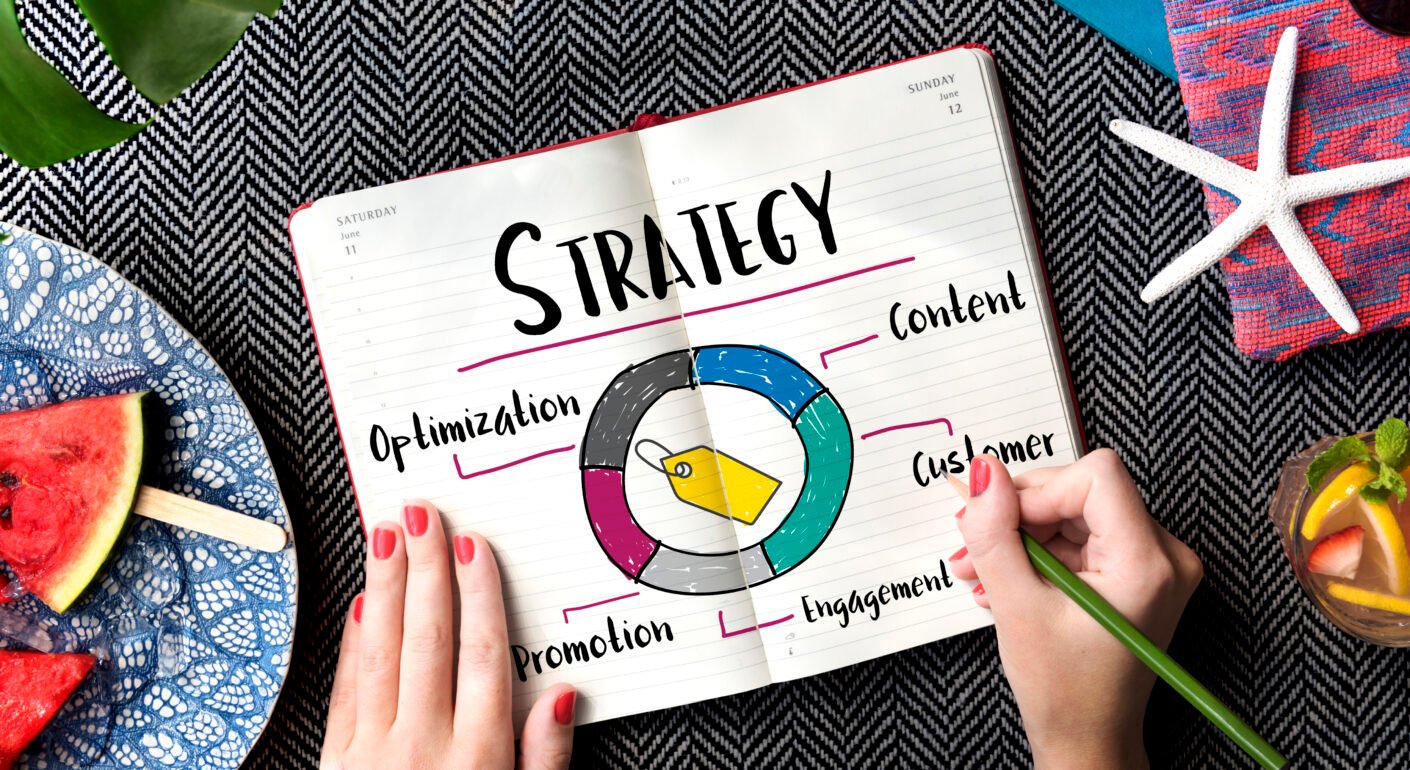
Marketing without a strategy is one of the most common reasons businesses burn budgets without seeing meaningful results. At first, it can feel productive. Ads are running, content is being posted, emails are being sent, and activity is high. But over time, cracks begin to show. Results become inconsistent, costs rise, and growth stalls. This happens because marketing without a strategy is driven by action, not direction.
A marketing strategy acts as the foundation that connects business goals with execution. Without it, marketing becomes reactive rather than intentional. Decisions are made based on trends, competitor moves, or short-term pressure instead of data, positioning, and long-term objectives. Eventually, this lack of alignment causes marketing efforts to break down. This is why businesses that invest in a structured approach to marketing strategy, like the frameworks used by experienced agencies such as zepimedia, tend to achieve more consistent and scalable results.

Why Marketing Without a Strategy Fails Over Time
One of the biggest problems with marketing without a strategy is unclear targeting. When there is no defined ideal customer, campaigns attempt to speak to everyone. Messaging becomes generic, offers lack relevance, and conversion rates drop. Businesses may see traffic or impressions, but those numbers rarely translate into revenue because the audience was never clearly defined in the first place.
Another reason marketing without a strategy fails is inconsistent messaging. Strategy defines how a brand communicates, what it stands for, and how it differentiates itself. Without that clarity, messaging changes constantly. One month the focus is price, the next month it is quality, and the next month it is speed. This inconsistency erodes trust and makes it difficult for potential customers to understand why they should choose the brand over competitors.
Budget waste is another unavoidable consequence. When marketing without a strategy, spending decisions are often based on assumptions rather than performance frameworks. Money gets allocated to channels without understanding their role in the funnel. Paid ads might be used to generate awareness when the real issue is conversion, or content might be produced without a clear distribution plan. Research published by HubSpot consistently shows that marketers who define clear strategies are significantly more likely to report positive ROI than those who operate tactically.
Poor marketing also makes optimization nearly impossible. Without clear goals and benchmarks, there is nothing to measure performance against. Data exists, but it lacks context. Metrics are reviewed in isolation instead of being tied to broader objectives such as customer acquisition cost, lifetime value, or pipeline growth. This leads to constant changes without meaningful improvement. I
In contrast, a strategic marketing approach creates structure and focus. It defines the target audience, clarifies the value proposition, selects the right channels, and establishes measurable goals. Strategy turns marketing into a system rather than a collection of disconnected actions. Execution becomes intentional, results become predictable, and scaling becomes possible.
A strong strategy does not slow marketing down. It accelerates growth by removing guesswork. Teams know what to prioritise, budgets are allocated efficiently, and messaging stays consistent across channels. Most importantly, marketing efforts are aligned with business outcomes rather than vanity metrics.
Marketing without a strategy will always break because it lacks direction. It may produce short-term activity, but it cannot sustain long-term growth. Businesses that want consistent results must treat strategy as the starting point, not an afterthought. When strategy leads and execution follows, marketing stops being an expense and starts becoming a growth engine.